

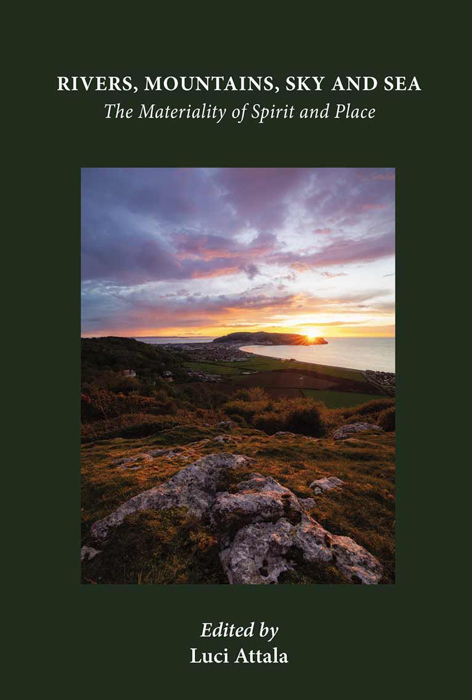
Rivers, Mountains, Sky and Sea:
The Materiality of Spirit and Place
Edited by Luci Attala
This volume, emerging out of a conference at the University of Wales Trinity Saint David, brings together a diverse group of contributors to examine our relationship with the environment from a wide range of perspectives. The different chapters consider early years education, personal experience and indigenous perspectives, and range across the natural and built environments to public and domestic spheres, exploring earth, water and sky. The overarching question addressed by the contributors is how we perceive, represent, imagine, engage with, and participate in, our material surroundings. At a time when environmental and ecological issues have never been more pressing, the book provides a timely reminder of the human dimension in a global context.
Share
Table of Contents
- Introduction: Materiality, Liveliness and Personhood in the Anthropocene
Luci Attala and Nicholas Campion
Download PDF - Sacred and Cosmic Mountains in the Himalaya and the Andes: Ascent and Circumambulation
McKim Malville, - Nature, Ecology and Early Years Education
Glenda Tinney, - Syntax and desire in early landscape photography
Susanne Klein, Lilith Goldschmidt, ‘Syntax and desire in early landscape photography’ - What Goes Down Must Come Up’: Ezuamas and the Non-Material Connections of Mountains, Rivers and Sea in a South American Indigenous Landscape.
Alan Ereira, - Sun, Sea and the Afterlife in the Bronze Age Aegean
Ilaria Cristofaro - The Afon Cynfael – A river’s part in the cosmology of the Mabinog.
Bernadette Brady - Watching the River Flow: Water, Music and Liverpool’s Materiality of Place.
Alex Scott - The extraordinary through the pursuit of the ordinary: the activity of swimming as a liminal act.
Morag Feeney-Beaton - Wind, Waves and Wooden Wombs: An Ethnography of an East Coast Houseboat Community
Melanie Long - Mountains, waters, calendar, and maize: social interactions between human and non-human persons.
Stanislaw Iwaniszewski - Environmental Integration versus Modern Cultural and Economic Ethos. An Interdisciplinary Approach to Modern Resource Consumption: Landscape and society.
Selma Faria - The O2 in Greenwich, London, as Sacred Space
Fenella Dean
Reviews
Across space and time this fascinating and original edited book brings together 13 papers that explore human and other-than-human relations in our wider-than-human world. The intersections of people and place (in various types of -scapes), are considered through the overarching theme of New Materialities with its focus on resolving the anthropocentric division of people and the rest of the planet.
Christina Welch, Reader in Religious Studies, University of Winchester
………………………………………….
This volume of essays makes the case that it is imperative that we reconsider our relationships with non-human beings. These essays explore a diverse range of ways in which we can transition from an anthropocentric to an ecocentric view of the landscape. This entails perceiving the landscape not as a resource or as an inert stage for human activity but identifying ways of being in the landscape. The authors draw on a wide range of methodologies, from auto-ethnography to archaeostronomy. There are a wide range of topics covered in the various chapters from Traditional Ecological Knowledge (TEK) to wild swimming. Nonetheless, several common themes and issues emerge across these manifold topics such as: extending the view of personhood and agency to non-human beings; the ambiguity of the boundary between the individual beings and the environment; and interconnectivity and harmony.
This collection of essays does not simply analyse but identifies ways of being part of landscapes that we inhabit. By being in, rather than thinking that we are separate from the landscape, will mitigate the environmental catastrophe that humanity and the planet are facing. As such all the authors can be considered as being engaged intellectuals who are actively concerned with suggesting more sustainable ways of relating to the environment.
This volume is of interest to anyone who is concerned with sustainable living, ways of relating to the landscape, personhood, or sacred places. All the chapters are written in an engaging style, are accessible to non-specialists, but are also relevant to experts in the various fields. I highly recommend this volume to anyone who is concerned with how we can address the environmental crisis in the Anthropocene.
Stephen Jacobs: Author of Sustainable Living at the Centre for Alternative Technology: Radical Ideas and Practical Solutions. London: Routledge (2023)
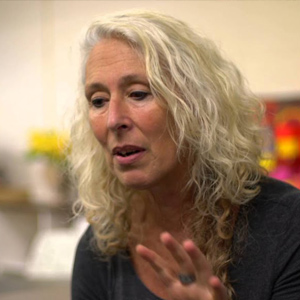
Editor
Luci Attala is Associate Professor, Senior Lecturer in Anthropology and Director of the UNESCO-BRIDGES UK hub at the University of Wales Trinity Saint David. Together with Louise Steel she is series editor of the University of Wales Press series on New Materialities. She is the author of How Water Makes us Human (University of Wales Press (2019).